Devops Course in Coimbatore
Join the No 1 DevOps Course in Coimbatore at Xplore IT Corp to learn how to optimize development, deployment, and operations. The DevOps Course in Coimbatore provides practical training, exposure to real time projects, and 100% placement support from Xplore IT Corp.
Study. Qualify. Launch Your Career in 90 Days.
- 200,000+ Students Empowered across multiple domains
- 350+ Institutional Collaborations for academic and corporate training
- 1,500+ Impactful Workshops Conducted nationwide
- 12+ Years of Unmatched Excellence in education and training
- 99% Success Rate with proven career outcomes
Trusted by 1,00,000+ Students Across India


Launch Your Tech Career Today!
Master in-demand skills with hands-on training in Java, Python, AI, Cloud, Full Stack, Digital Marketing, and Data Science. Learn from industry experts, gain real-world experience, and get 100% placement support to kickstart your dream career.
Highlights of Xplore IT Corp’s Devops Training in coimbatore
Syllabus Curriculum
Our DevOps course in coimbatore will take you through the software development and software operation essentials and then dive into advanced DevOps tools such as Docker, Kubernetes, Jenkins, Ansible, Git, and AWS.
Work on Real Projects
At Xplore IT Corp, Our DevOps Training in Coimbatore includes live projects which are being deployed in the industry. You will work on real deployment pipelines, cloud setups, and automation tasks that will develop more practical skills which employers want.
Real Life Experience
Our DevOps trainers are career professionals who have worked on real time projects across multiple domains. They will mentor you step by step and guide you with one-on-one mentoring in the DevOps tools while receiving real world insights.
Study at Your Own Pace
In regards to the DevOps course in Coimbatore, we have both online and offline delivery modes. Whether you are a student or working professional, it allows you to choose the most suitable study style that matches your time and goals.
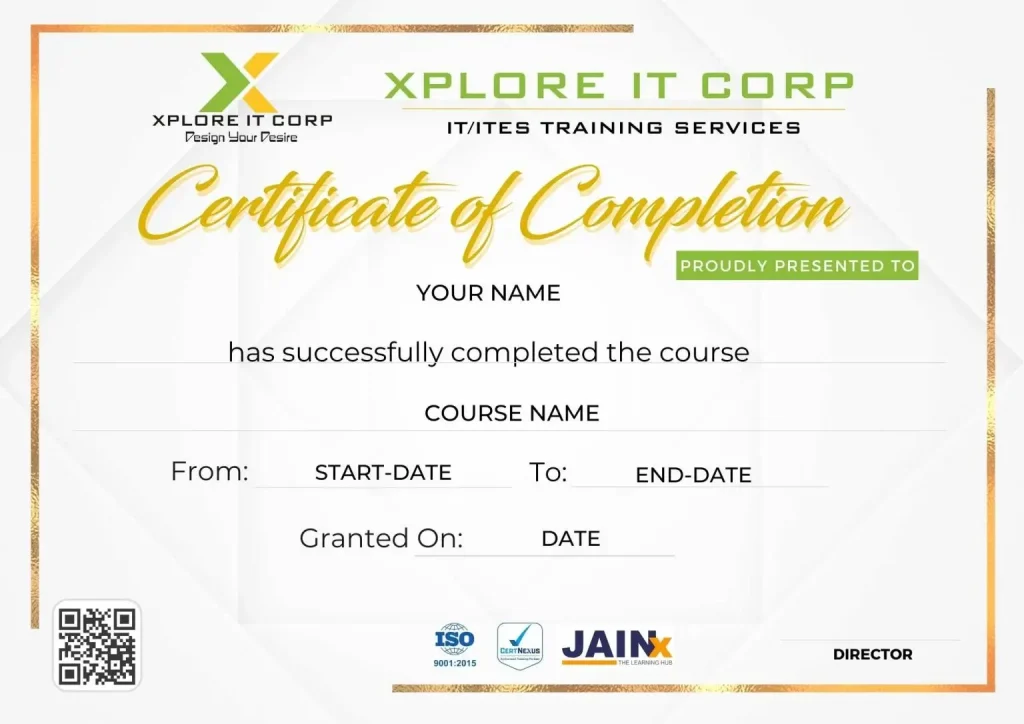
Job-Ready Certificate
Upon finishing the Best DevOps course in Coimbatore, you will receive a certificate recognized by various large companies. The certificate is your credential that you can share at interviews to highlight your skill acquisition.
Upcoming Batches
Classroom Sessions – Learn Smart. Practice Hard. Shine Bright.
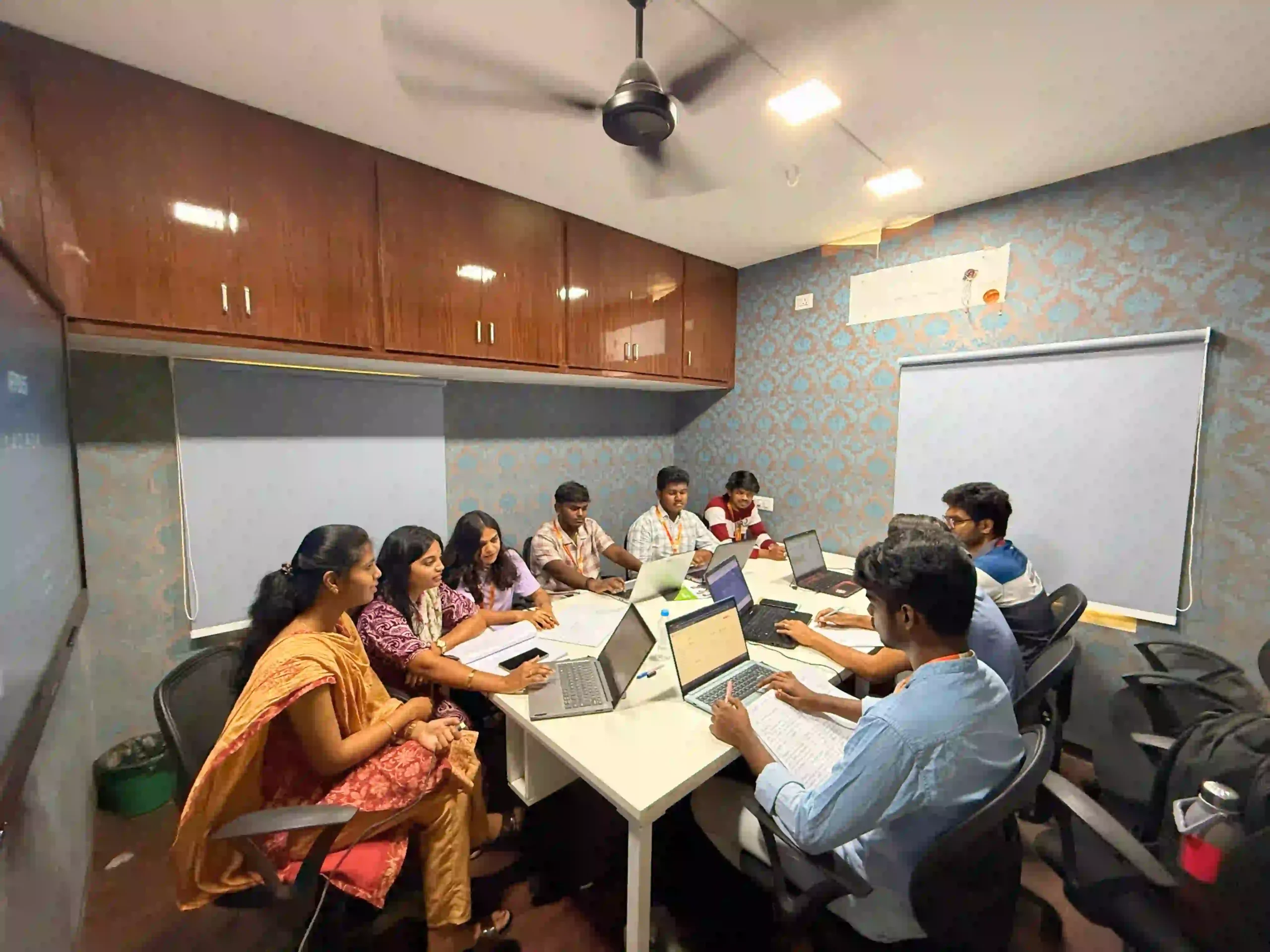
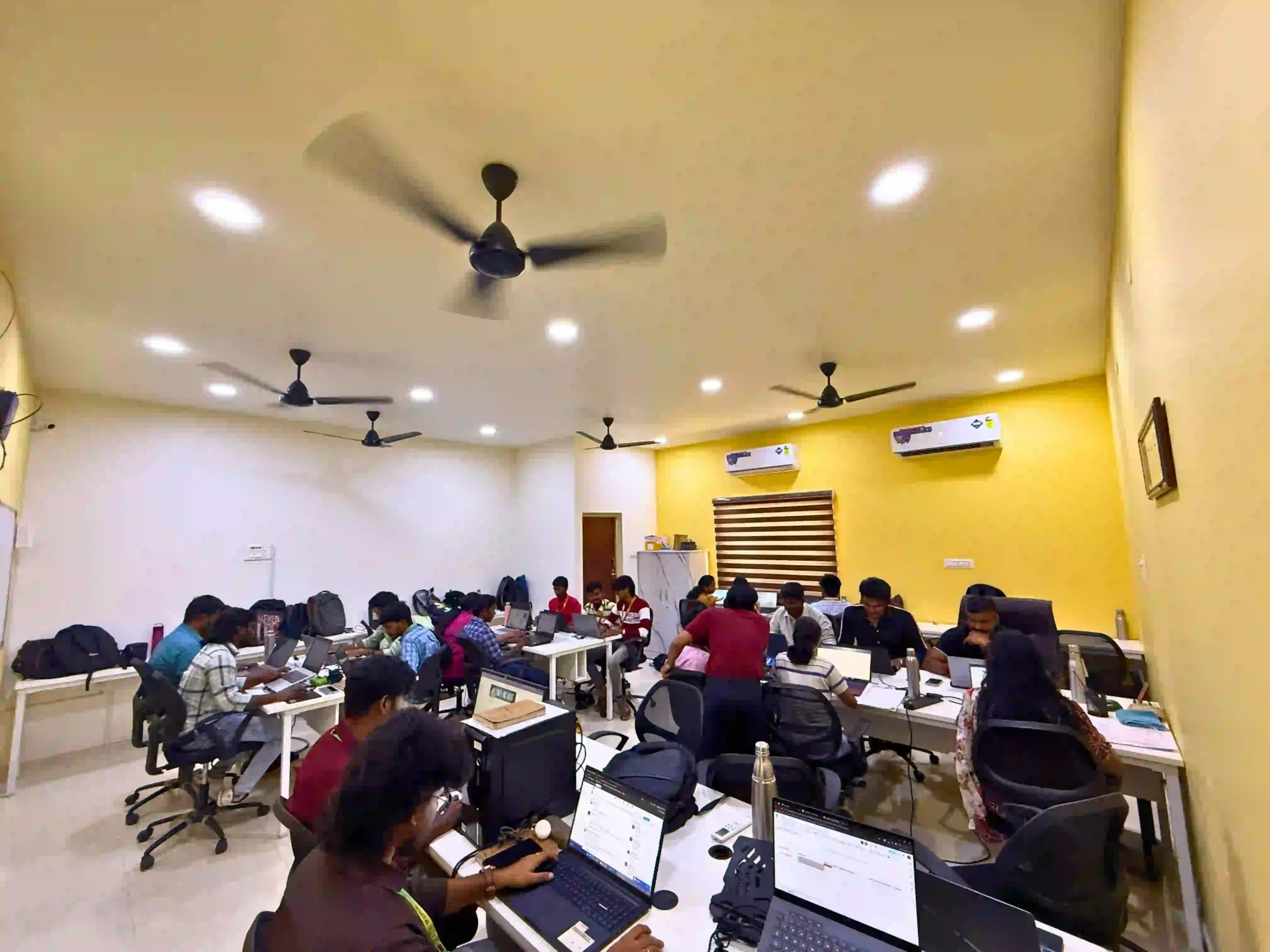
- At Xplore IT Corp, you will have the opportunity of learning by doing with the guidance of real time industry mentors.
- You will work on live projects, interact with industry experts face to face and learn the skills that make you job ready faster.
- Don’t hesitate to choose the right moment; shape your career with devops training in Coimbatore.
Flexible Online Learning – Experience Real Time Interaction
- Live sessions conducted by instructors with instant doubt clearing and lifetime access to recorded materials are among the benefits you will get with the program.
- A perfect solution for working salaried individuals or students who prefer to learn flexibly and avoid commuting.
- Do you wish to have the modern learning experience? Sign up today for your Devops course Online Training with Xplore IT Corp.
Reach Us Now!
Learning Outcomes of Devops Course in coimbatore:
Core Concepts of DevOps
The 3-month DevOps Course in Coimbatore will introduce you to a basic understanding of integrating development and operations. The course provides a hands-on foundation in automation, continuous integration, continuous delivery, and deployment.
Technical Skills
You will work with some of the most popular DevOps tools such as Git, Jenkins, Docker, Kubernetes, Ansible, and Terraform. Through fun and practical sessions, you will learn how to automate builds, provision infrastructure, and simplify deployments.
Data management & Tools
Assist students in becoming proficient in aspects like data collection, cleaning, processing, visualization and interpretation of large datasets by effectively utilizing data science tools like Excel, Tableau, Power BI as an integral part of the Data Science course in Coimbatore.
Cloud & Infrastructure Management
In this well-structured DevOps course in Coimbatore, the experienced trainers guide you through cloud computing platforms such as AWS, Azure, and Google Cloud. You will understand how to deploy, scale and monitor applications.
Continuous Integration and Deployment (CI/CD)
Learn how to build and maintain CI/CD pipelines that run automated software testing, integration and deployment processes. This is what makes development faster, more accurate and seamless.It is also one of the key definitions of a professional DevOps Engineer.
Collaboration & Problem Solving
This course is more about building collaboration, problem solving and logical capacity through real world projects. In the live case studies, you will develop the capacity for critical thinking through challenges to prepare you for actual jobs in the field.
DevOps course Syllabus:
- DevOps Principles in detail
- DevOps Engineer Skills in the market
- Knowing DevOps Delivery Pipeline
- Market trend of DevOps
- DevOps Technical Challenges
• Tools we use in DevOps
- Essentials of Cloud computing?
- Cloud and virtualization architecture
- Cloud deployment architecture
- Cloud providers – An overview
- Why we need DevOps on Cloud?
- Introducing to Amazon web services
- DevOps
- Phases of Continuous Integration
- Software development methodology
- Introduction to DevOps
- Samples of Continuous Integration (CI) / Continuous Delivery (CD) – Use cases
- Artifact repository and repository management
- Linux – General, shell programming, processes & signals …
- RabbitMQ…
- MariaDB
- Knowing about Version control
- Git – A CLI
- Essentials of GIT in industry
- How to setup GIT
- Installing Git
- First-Time Git Setup
- Getting a Git Repository
- Working with various commands in GIT
- CI/CD Github actions
- CI/CD Gitlab
- Recording Changes to the Repository
- How to check the Status of Your Files
- How to track New Files
- Staging our modified files
- Viewing Your Unstaged and Staged Changes
- How to commit Your Changes
- Skipping the Staging Area and commit
- Removing Files from GIT
- Viewing the Commit History
- Limiting Log Output
- Using a GUI to Visualize History
- Undoing Things
- Changing Your Last Commit
- Unstaging a Staged File
- Unmodifying a Modified File
- Working with Remotes
- Showing Your Remotes
- Adding Remote Repositories
- Fetching and Pulling from Your Remotes
- Pushing to Your Remotes
- Inspecting a Remote
- Removing and Renaming Remotes
- Branching and Merging in Git
- What a Branch Is
- Basic in Branching and Merging
- Branch Management in GIT
- Branching Workflows and its usage
- Remote Branches – create and delete
- Rebasing
- Git workflows
- Git cheat sheetJenkins
- Essentials of Continuous Integration
- An example scenario where CI is used
- Know about Jenkins and its architecture in detail
- Jenkins tool Management in detail
- Know about User management in Jenkins
- Authentication
- Jenkins own database user creation
- Options to enable integration with LDAP
- Authorization
- Matrix based authorization
- Project based authorization
- Overview of Maven
- Maven project structure
- Maven plugins
- Project Object Model (POM) – fundamental unit of work in Maven project
- Maven build lifecycle
- Adding external dependencies to maven pom.xml
- Maven build and test project
- Creating jobs and automatic build settings
- What is Jenkins Pipeline?
- Why Pipeline?
- Integration with GIT
- How to enable project based authorization for a job
- Source code management while creating jobs
- Triggering automated build
- Maven job setup
- Know about post build options for jobs like notifications, trigger another
- build, publishing reports, etc.
- Adding a slave node to Jenkins
- Building Delivery Pipeline
- Notification settings in Jenkins
- Plugin management in JenkinsDocker
- Introduction
- Real-world Shipping Transportation Challenges
- Introducing Docker and its technology
- Understanding of Docker images and containers
- Working with container
- How to Share and copy a container
- Container Life Cycle
- How to use Base Image and customize
- Creation of Docker File
- How to Publish Image on Docker Hub
- Docker install on Amazon Linux AMI
- Docker install on EC2 Ubuntu 14.04
- Docker container vs Virtual Machine
- Docker install on Ubuntu 14.04
- Docker Hello World Application
- Nginx image – share/copy files, Dockerfile
- Working with Docker images : brief introduction
- Docker image and container via docker commands (search, pull, run, ps, restart,
attach, and rm)
- More on docker run command (docker run -it, docker run –rm, etc.)
- Docker Networks – Bridge Driver Network
- Docker Persistent Storage
- File sharing between host and container (docker run -d -p -v)
- Linking containers and volume for datastore
- Dockerfile – Build Docker images automatically I – FROM, MAINTAINER, and
build context
- Dockerfile – Build Docker images automatically II – revisiting FROM,MAINTAINER, build context, and caching
- Dockerfile – Build Docker images automatically III – RUN
- Dockerfile – Build Docker images automatically IV – CMD
- Dockerfile – Build Docker images automatically V – WORKDIR, ENV, ADD, and ENTRYPOINT
- Docker – Apache Tomcat
- Docker Compose with two containers – Flask REST API service container and an Apache
server container• Introduction to Docker Networking
- Network Types in docker technology
- Docker Container Networking
- Docker Compose – An introduction
- Docker Swarm – An introduction
- Use Docker Compose to create php, wordpress, mysql
- How to Start Containers on a Cluster with Docker Swarm
- Creating and Scaling an application in Docker swarm
- Introduction to Kubernetes
- Kubernetes Cluster Architecture — An overview
- Understanding concepts of Pods, Replica sets, deployments and namespaces
- Understanding the concepts of services and networking
- Kubernetes I – Running Kubernetes Locally via Minikube
- Kubernetes II – kops on AWS
- Kubernetes III – kubeadm on AWS
- AWS : EKS (Elastic Container Service for Kubernetes)
- Introducing Ansible – A configuration management tool
- What is Ansible?
- Quick Preview – Setting up web servers with Nginx, configure environments, and
deploy an App
- SSH connection & running commands
- Ansible: Playbook for Tomcat 9 on Ubuntu 18.04 systemd with AWS
- Modules
- Playbooks
- About Playbooks
- Playbook Language Example – YAML
- How to Write Playbooks
- Tasks in Playbooks
- Understanding about various tasks in playbook
- Introduction to Handlers and variables
- Learn about using handlers, variables in the playbook• Handlers
- Roles
- Role Directory Structure
- Using Roles
- Role Duplication and Execution
- Role Default Variables
- Role Dependencies
- Role Search Path
- Ansible Galaxy
- Playbook for LAMP HAProxy
- Installing Nginx on a Docker container
- AWS : Creating an ec2 instance & adding keys to authorized_keys
- AWS : Auto Scaling via AMI
- AWS : creating an ELB & registers an EC2 instance from the ELB
- Deploying WordPress micro-services with Docker containers on Vagrant box via
Ansible
- Setting up Apache web server
- Ansible with Terraform
- Including and Importing
- Includes vs. Imports
- Importing Playbooks
- Including and Importing Task Files
- Including and Importing Roles
- Errors
- Exception handling with try
- Handling Multiple Exceptions
- Writing your own Exception
- New Style Classes
- Creating Classes
- Constructor
- Instance Methods
- Inheritance
- Polymorphism
- Abstraction
- Encapsulation
- Exception Classes
- List Comprehensions
- Nested List Comprehensions
- Dictionary Comprehensions
- Tuples
- Iterators
- Generators
- With Statement
- Data Comprehension
- Namedtuple()Deque
- Chainmap
- Counter
- Dict and Types
- Introduction
- Components and Events
- An Example GUI
- The root Component
- Widgets
- Buttons
- Introduction
- Hello World
- Major Classes
- Using Qt Designer
- Signals & Slots
- Layout Management
- Basic Widgets
- Drag & Drop
- Database Handling
OPENCV 3 IMAGE AND VIDEO PROCESSING WITH PYTHON
- The core: Image- load, convert and save
- Smoothing Filters A – Average, Gaussian
- Smoothing Filters B – Median, Bilateral
- OpenCV 3 with Python
- Image – OpenCV BGR: MatplotLIB
- Basic image operations – pixel access
- iPython – Signal Processing with NumPy
- Signal Processing with NumPy I – FFT and DFT for sine, square
- waves, unitpulse, and random signal
- Signal Processing with NumPy II – Image Fourier Transform: FFT&
- DFT
- Inverse Fourier Transform of an Image with low pass filter: cv2.idft()
- Image Histogram
- Video Capture and switching colour spaces – RGB / HSV
- Adaptive Thresholding – Otsu’s clustering-based image thresholding
- Edge Detection -Sobel and Laplacian Kernels
- Canny Edge Detection.
- Watershed Algorithm: Marker-based Segmentation I
- Watershed Algorithm: Marker-based Segmentation II
- Image noise reduction: Non-local Means denoising algorithm
- Image object detection: Face detection using Haar Cascade
- Classifiers
- Image segmentation -Foreground extraction Grabcut algorithm
- based on graph cuts
- Image Reconstruction – Inpainting (Interpolation) – Fast Marching
Video: Mean shift object trackingMACHINE LEARNING WITH SCIKIT – LEARN
- Installation
- Features and feature extraction – iris dataset
- Machine Learning Quick Preview
- Data Preprocessing I- Missing/Categorical data
- Data Preprocessing II- Partitioning a
- Selection / Regularization dataset/Feature Scaling/Feature
- Data Preprocessing III– Dimensionality Reduction vs Sequential
- Feature
- Selection/Assessing Feature importance via random forests
- Data Compression via Dimensionality Reduction I – Principal
- Component Analysis (PCA)
- Data Compression via Dimensionality Reduction II- Linear
- Discriminant Analysis (LDA)
- Data Compression via Dimensionality Reduction III – Nonlinear
- mappings via kernel principal component (KPCA) analysis
- Logistic Regression, Overfitting & regularization
- Supervised Learning & Unsupervised Learning – e.g. Unsupervised
- PCA
- Dimensionality reduction with iris dataset
- Unsupervised Learning -KMeans clustering with iris dataset
- Linearly Separable Data -Linear Model & (Gaussian)radial basis
- function kernel (RBF kernel)
- Decision Tree Learning I – Entropy, Gini, and Information Gain
- Decision Tree Learning II – Constructing the Decision Tree
- Random Decision Forests Classification
- Support Vector Machines (SVM)
FLASK WITH EMBEDDED ML
- Serializing with pickle & DB setup
- Basic Flask AppEmbedding Classifier
- Deploy
- Updating the Classifier
- Batch Gradient Algorithm
- Perceptron model on the Iris Dataset using Heaviside step Activation
- Batch Gradient Descent Vs Stochastic Gradient Descent
- Adaptive Linear Neuron using linear activation function with – batch
- gradient descent method
- Adaptive Linear Neuron using linear activation function with –
- stochastic gradient descent (SGD)
- Logistic Regression
- VC (Vapnik – Chervonenkis) Dimension & Shatter
- Bias – Variance trade off
- Maximum Likelihood Estimation (MLE)
- Neural Networks with backpropagation for XOR using one hidden
- layer Min Hash
- tf-idf weight
- Natural Language Processing (NLP)
- Sentiment Analysis
- IMDb & bag-of-words
- Tokenization, Stemming & stop words
- Training & Cross Validation
- Out-of-Core
- Reinforcement Learning
- Reinforcement Learning Basics
- Approximation of methods in RL
- Case Studies Examples – RL
- Model Training & Deployment using AWS
- Deploying Machine Learning Model
- Training Machine Learning Model
- Forward propagation
- Gradient descent
- Backpropagation of errors
- Checking Gradient
- Training via BFGS
- Overfitting & Regularization
- Deep Learning – PYTORCH & KERAS
- Practical Application of Deep Learning in predicting Loan Default
- Backward Propagation in Pytorch
- Preparing datasets in Pytorch
- Keras functional API
- Classification Layers
- Training with Fit Generator
- Image Recognition (Image Uploading)
- Image Recognition (Image Classification)
- Theano, TensorFlow
Our DevOps Course Trainer

Gobinath Arumugam
Cloud Architect | DevOps Engineer | Technical Mentor
Gobinath is a seasoned cloud architect and DevOps specialist with a decade of hands-on experience in cloud automation, scalable deployments, and enterprise-level architecture. His training blends deep technical insight with industry best practices, preparing learners to excel in real DevOps environment
10+ Years of Experience in Cloud, Python & Automation
Delivered Training in 150+ Institutions & 20+ Corporates Across India
12,000+ Students Mentored | 250+ Batches Trained Across India
Technical Expertise
- AWS, Azure & GCP Cloud Fundamentals
- CI/CD Pipelines (Jenkins, GitHub Actions, GitLab)
- Docker, Kubernetes, Container Orchestration
- Infrastructure as Code (Terraform, Ansible)
- Monitoring, Scaling & Cloud Security Essentials
- Real-World DevOps Project Deployment
Gobinath Arumugam
Cloud Architect | DevOps Engineer | Technical Mentor
Gobinath is a seasoned cloud architect and DevOps specialist with a decade of hands-on experience in cloud automation, scalable deployments, and enterprise-level architecture. His training blends deep technical insight with industry best practices, preparing learners to excel in real DevOps environments.
10+ Years of Experience in Cloud, Python & Automation
Delivered Training in 150+ Institutions & 20+ Corporates Across India
12,000+ Students Mentored | 250+ Batches Trained Across India
Learning Experience
His sessions focus on practical cloud deployment, automation workflows, real DevOps pipelines, and hands-on architecture building — giving learners confidence to tackle modern cloud roles.
Placement session and Job Opportunity for Devops Course:
1. Career Support & Guidance
- Xplore IT Corp will offer you devoted placement help and career assistance through our placement cell.
- Our DevOps Course in Coimbatore offers comprehensive employability training, including developing soft skills, and having mock interviews, which ultimately prepares students for real life jobs.
2. Live Mock Interviews
- As part of our Best DevOps Training in Coimbatore, students complete mock interviews; these mock interviews imitate actual IT interview practices.
- Mock interviews help build student confidence, improve interpersonal skills and obtain more technical knowledge, and train students to be able to do well in any professional interview.
3. Referrals of the Course
- Through our DevOps course programme, we provided industry referrals to well trained DevOps experts to recommend for the best IT and cloud organisations.
- Frequently, the students of our DevOps course are placed as soon as they complete the course when they receive the proper knowledge and obtain real-time experience on real life projects.
4. Resumes Assistance
- Our trainers assist you and guide you on how to write a professionally crafted, impressionable resume based on your DevOps skills, tools, and projects.
- Providing assistance in optimum resume preparation is an important part of our training as it helps students shape their skills in a way that will impress and appeal to recruiters in placement drives.
Benefits of Devops course Certificate
The top DevOps course provider in Coimbatore, offering comprehensive placement guidance to ensure your success.
Legitimize Your Credentials
We recognize your ability to gain a credential that meets the needs of global industry standards, assessing your ability to work in DevOps principles, automation, and deploying applications in the cloud.
Accelerate Your Career
The DevOps credential is reflective of your level of training and can strengthen your resume for opportunities in IT organizations, software developers, and cloud-based businesses.
Lifelong Validity
The DevOps certification you attain upon successfully completing DevOps training in Coimbatore from Xplore IT Corp is valid for life.
Effortless Certification Sharing & Validation
You can easily share your verified DevOps certification on professional networks like LinkedIn, your digital portfolio, or any company network.
Practical Experience
Along with your learning you will obtain real world experience to further develop the practicality of automation, deployment and CI/CD pipelines, to give you confidence in working on DEVOPS live work.
Companies our Students work In
Trained with real-time skills and practical knowledge, our students are now working with top organizations, driving growth and innovation across industries.

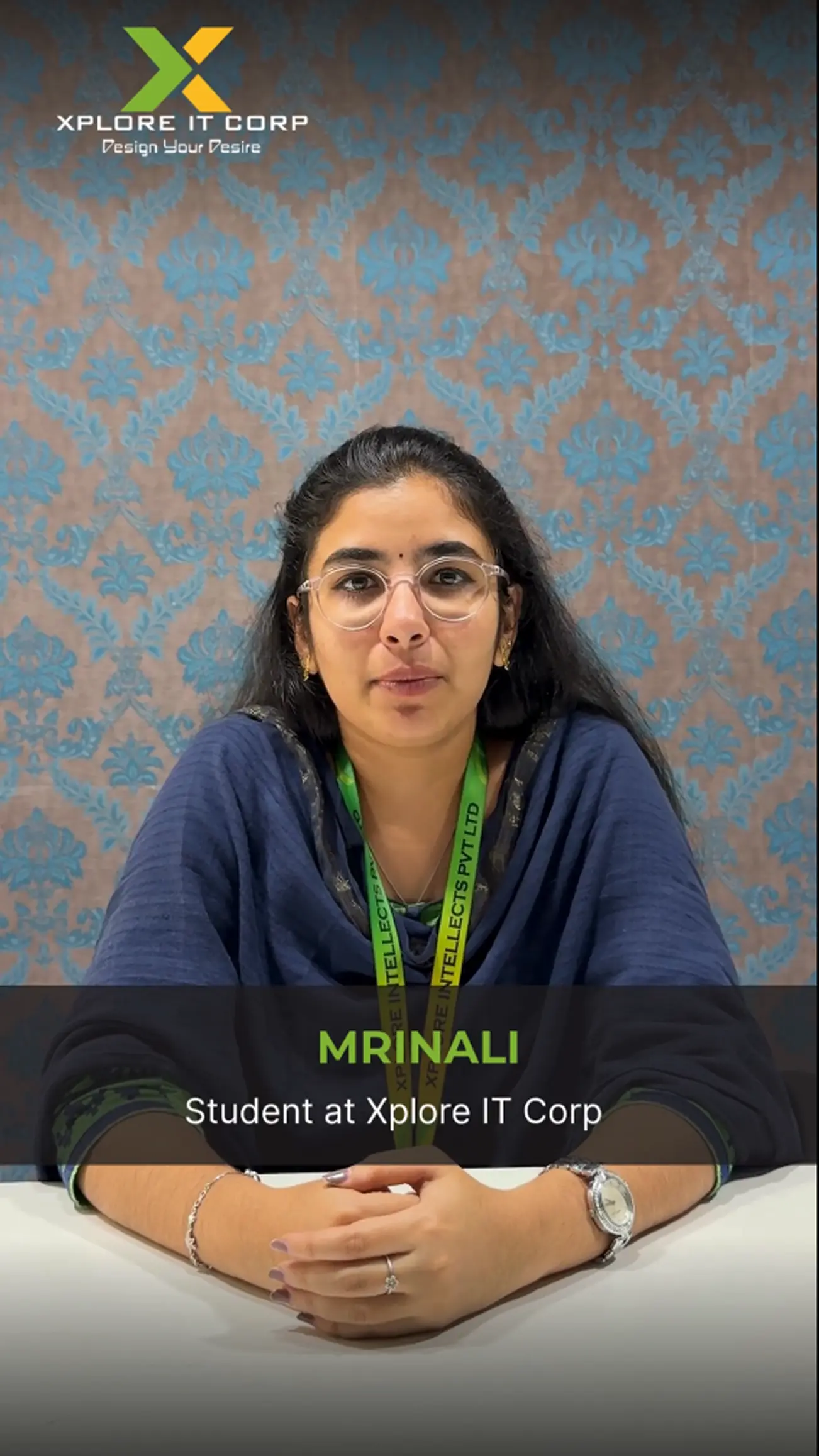
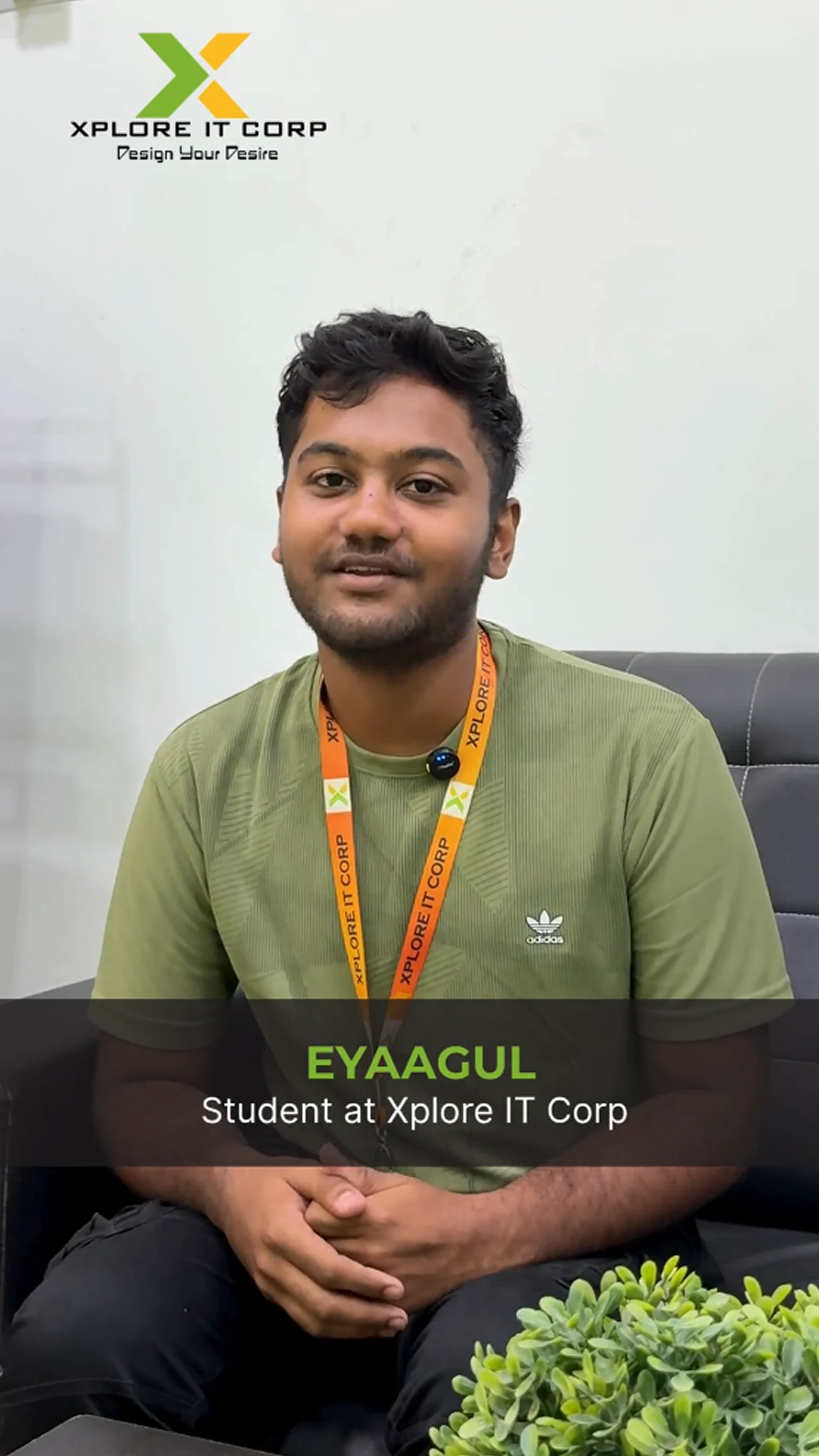
Voices of Our Graduates
From classroom to career success — read what our students and professionals have to say about their learning experience with us.


Benefits of Devops Course in Xplore IT Corp:
Job Opportunities
Our DevOps Course in Coimbatore provides you with the technical and operational competencies through hands-on training. The course is delivered in accordance with industry specifications at a low price point, aspiring IT professionals to create a solid foundation for their career in technology.
Learn Cutting-Edge DevOps Skills
You will gain hands on experience with our devops training in coimbatore the current tools and technologies, including Git, Jenkins, Docker, Kubernetes, Ansible, and AWS to support you in managing and deploying applications in real world instances.
Career Opportunities
After finishing your DevOps training in Coimbatore , you will be equipped for a challenging job like a DevOps Engineer, a Cloud Engineer, a Release Manager, an Automation Engineer, or a System Administrator in one of several leading IT and software companies.
Expand Your Professional Network
Students who take the DevOps course will have a chance to participate in professional workshops, guest sessions, and placement programs with industry professionals, trainers, and recruiters, which can broaden your professional network and your exposure to the community.
Learning by Doing
You will work on live projects, real-time case studies, and deployment simulations that reflect real world challenges in the industry. This strategy equips you to implement concepts well, along with the confidence to perform in real DevOps situations.
Support for Learning
Through your entire learning journey, you will receive ongoing trainer support, practical hands-on activities, and project-based learning support. Our mentors ensure that each student is sufficient in progressing from beginner to advanced DevOps levels with confidence.
Reach Us Now!
Career Opportunities of Devops Course:
DevOps Engineer
- DevOps Engineers focus on efficiently automating, qualifying, and deploying applications. They undertake the role of a bridge between software development and IT operations. They work to integrate the two roles, and deliver capable results faster.
- Key skills: CI/CD Pipelines, Docker, Kubernetes, Jenkins, AWS, Scripting (Python / Bash).
- Salary: ₹5 - 12 LPA
Cloud Engineer
- Cloud Engineers design, deploy, and manage cloud infrastructure across major providers like AWS, Azure, or Google Cloud. They deal with scaling the system and offering cost-effective, safe application utility.
- Key skills: Cloud Platforms (AWS/Azure/GCP), Terraform, Ansible, Networking, Linux.
- Salary: ₹4.5 - 10 LPA
Site Reliability Engineer (SRE)
- SREs are responsible for Systems reliability, uptime, and scalability. They make use of automation and monitoring tools, and strategies that can enable applications and infrastructure to achieve a higher level of availability.
- Key skills: Monitoring (Prometheus, Grafana), Automation, Scripting, Kubernetes, Troubleshooting.
- Salary: ₹6 - 14 LPA
Build & Release Engineer
- A Build & Release Engineer is vital in managing the entire build and deployment cycle of the software lifecycle. They guarantee that any update or release of an application makes it smoothly from development to production.
- Key skills: Jenkins, Git, Maven, CI/CD, Build Automation, Version Control.
- Salary: ₹4 – 9 LPA
Automation Engineer
- Automation Engineers are fundamental in smooth DevOps workflows. In the role of Automation Engineers, they primarily focus on automating the repetitive and mundane tasks to manage infrastructure such that the cycle to implement features is faster and with fewer errors.
- Key skills: Automation, Infrastructure Automation, Configuration Management, Ansible, Puppet, Shell/Python Scripting, Jenkins.
- Salary: ₹4 – 8 LPA
Infrastructure Engineer
- Infrastructure Engineer's work on designing and building on-premises and cloud infrastructure, focusing on improving application performance, automation capabilities, and scalable designs.
- Key skills: Virtualization, Terraform, Cloud Infrastructure, Linux, Networking.
- Salary: ₹5 - 10 LPA
Security Engineer (DevSecOps)
- DevSecOps Engineers integrate security into every stage of the DevOps lifecycle. They find vulnerabilities, enforce compliance, and automate security checks.
- Key skills: DevSecOps, Cloud Security, Container Security, Vulnerability Management, Compliance Tools.
- Salary: ₹5 - 11 LPA
Our Placement Sessions
Frequently Asked Questions (FAQ)
The DevOps course is about 3 to 4 months in total, but this will depend on the student’s speed, and whether the coursework is offered in-person or virtually. The courses will incorporate lectures/labs, and projects.
Absolutely not! Some familiarity with Linux or scripting might be helpful, but our instructors will teach everything from the ground up. You will be able to easily assimilate the material whether you are a beginner or have some previous experience.
You will learn about CI/CD pipelines, Docker, Kubernetes, Jenkins, Git, Automation through Ansible, Infrastructure as Code with Terraform, Cloud Deployment etc. and any other tools that help to automate and support the software development life cycle and operations.
Yes! After the completion of the course and projects, you will receive a recognized DevOps certification provided by Xplore IT Corp to validate your skills to employers.
yes. 100% of our DevOps course is practical based with live project training, demonstration of tools and real world careers with hands on experience.
Upon completion of the course, you are on your way to becoming a DevOps Engineer, Build & Release Engineer, Automation Engineer, Cloud Engineer, or Site Reliability Engineer -with salaries carried out at the most reputed IT firms.
YES! Please see Xplore IT Corp for total placement assistance from resume preparation, mock interviews, and an industry reference, if applicable, for job placement after training.
YES! Xplore IT Corp offers both online and offline learning with flexibility in your schedule.